

PUBLIC PROGRAMME: MATARIKI
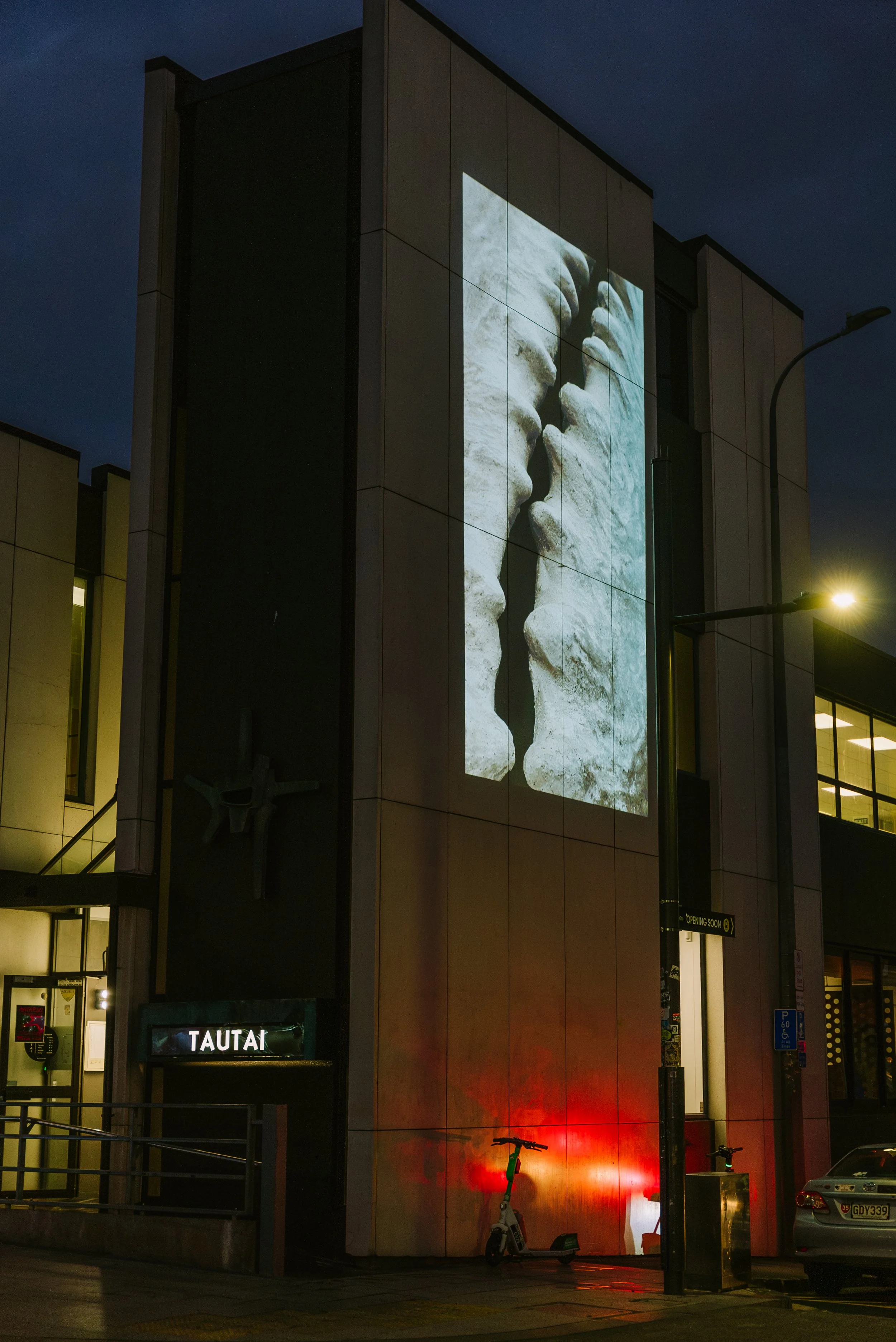
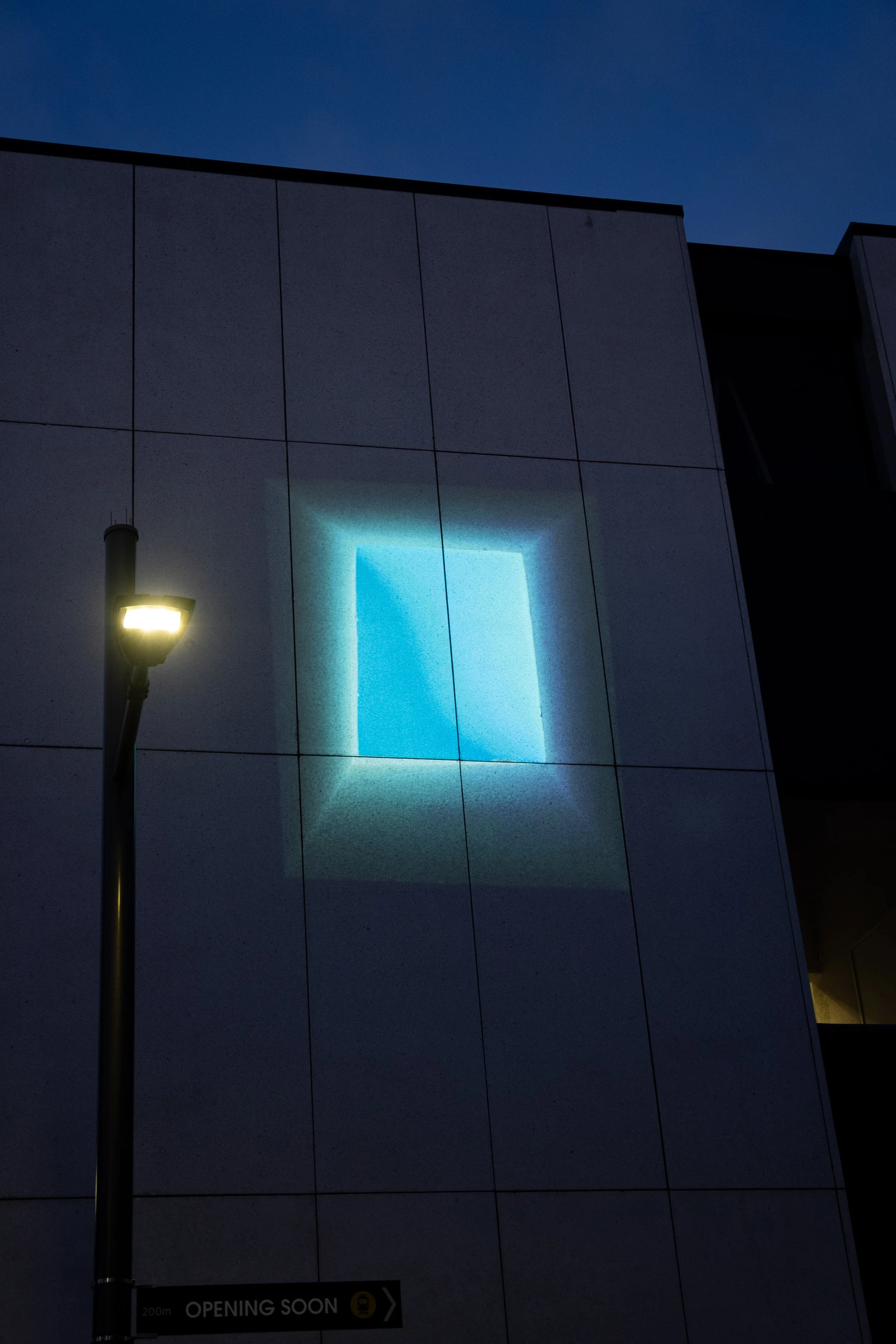
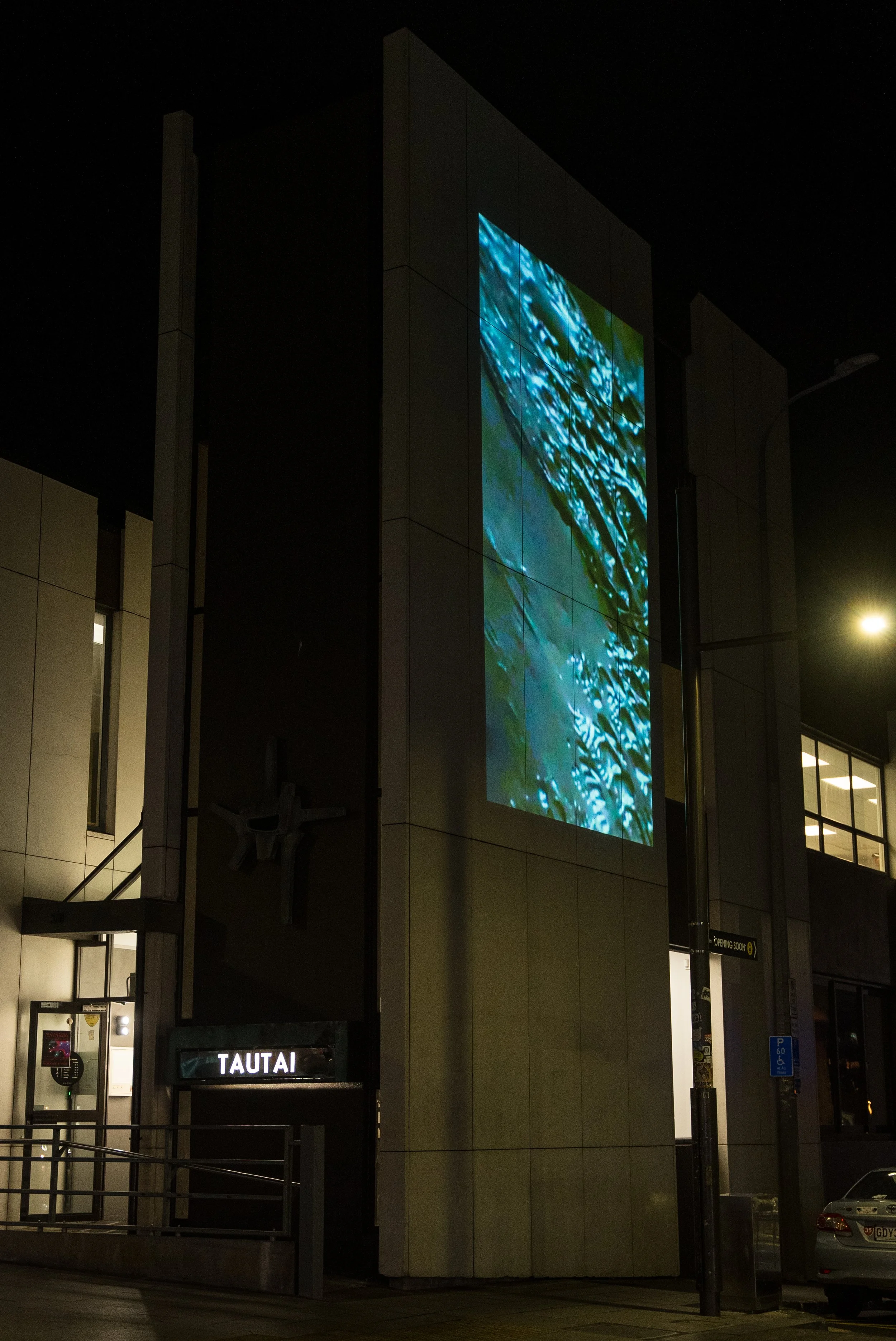
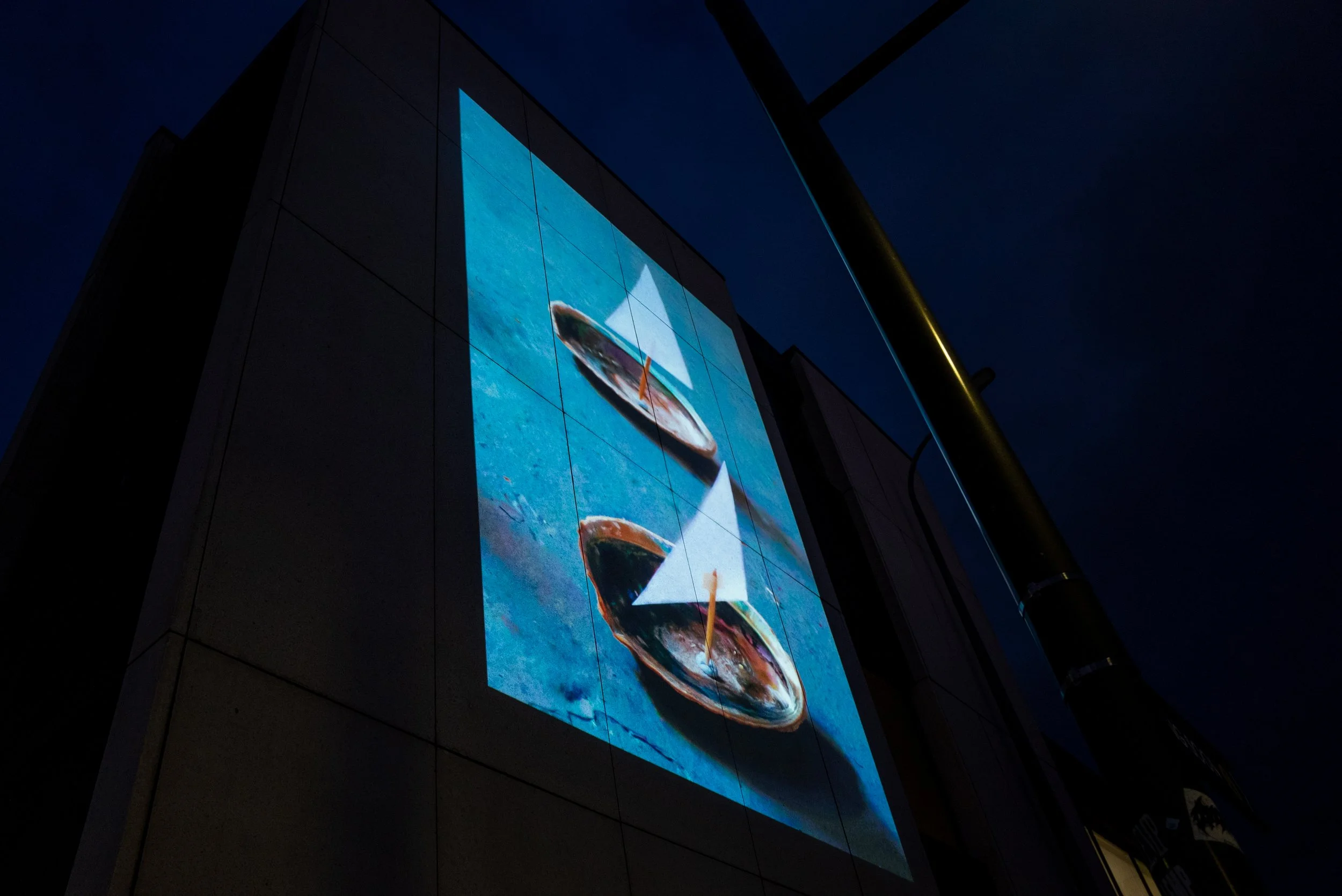
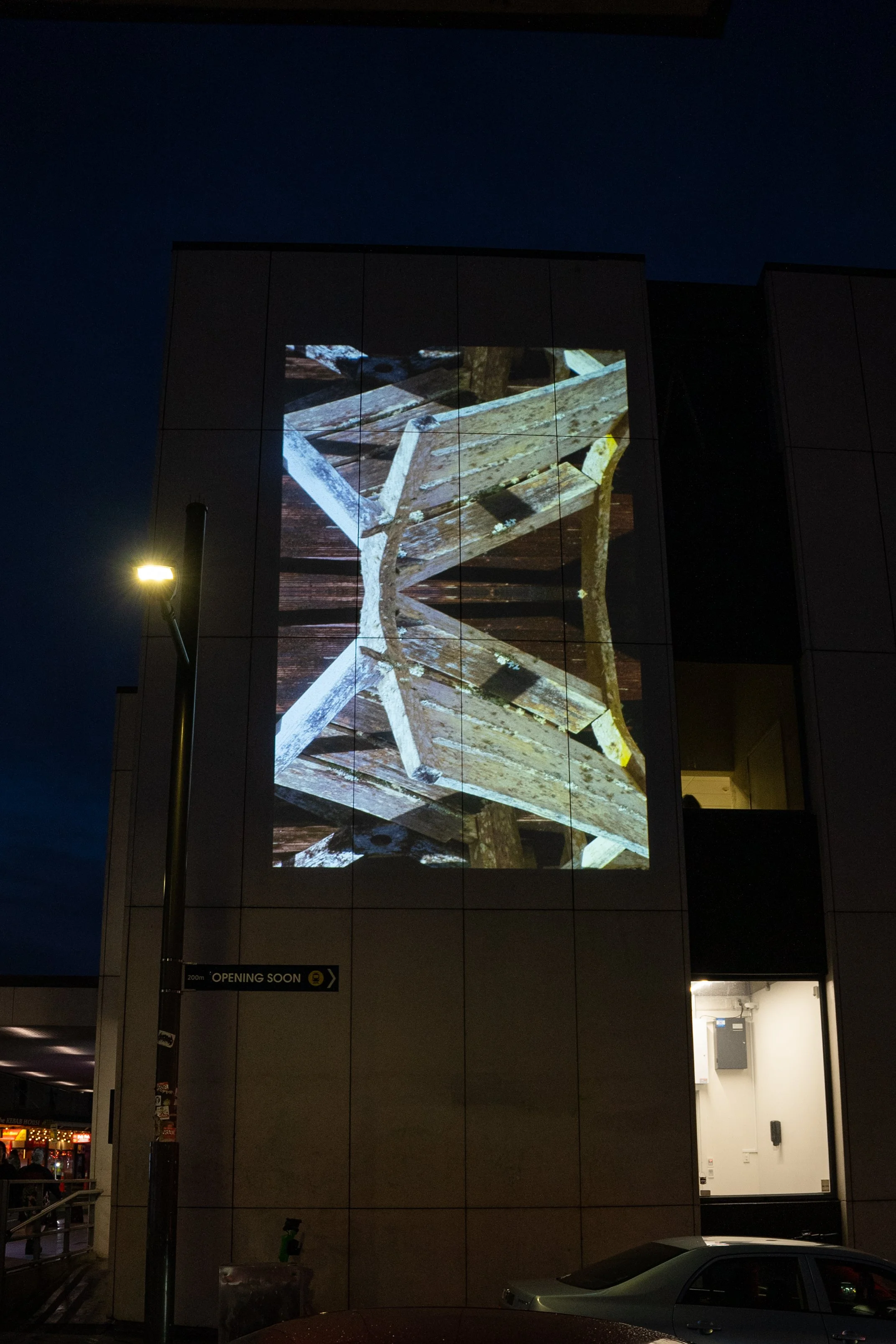
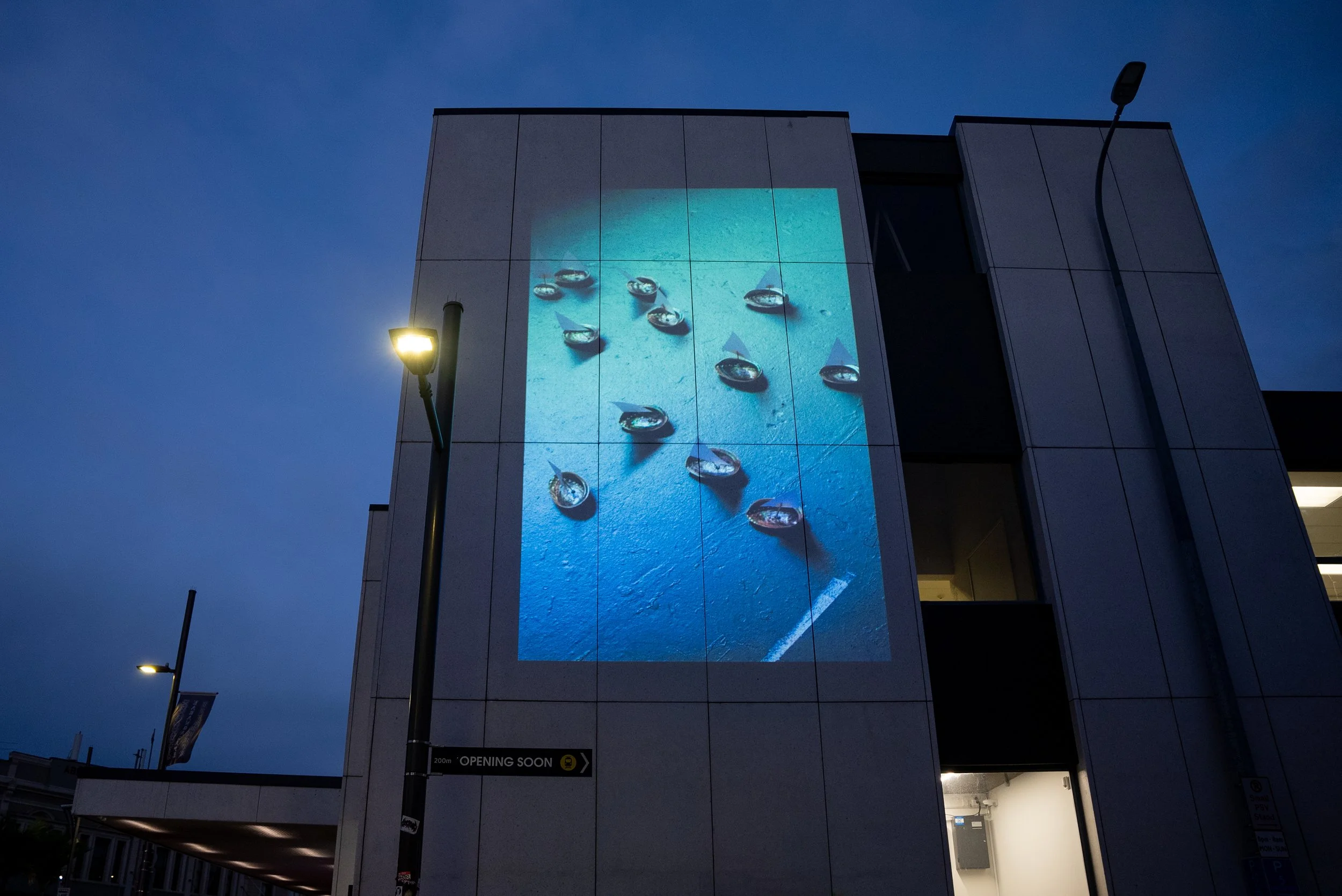
Image credits: Top left to right - Ayla Brockes, Carmel Aroha Salmanzadeh, Teuila Va’aelua. Bottom left to right - Portia Haddon 1, Miro Wrightson-Lyons, Portia Haddon 2.
As the stars of Matariki rose once again, Tautai joined the celebration of Matariki: Te Karanga-a-Hape with a large-scale outdoor projection featuring works by our exhibiting artists: Ayla Brockes, Portia Haddon, Carmel Aroha Salmanzadeh, Teuila Va’aelua and Miro Wrightson-Lyons.
Communities from across Tāmaki Makaurau and beyond were invited to experience the projection on Thursday 9 July, outside the Tautai building on East Street.
Audiences joined the curator and artists for an exhibition walkthrough of nobody belongs here more than you, followed by shared kai to celebrate the Māori New Year.
As part of the celebrations, we invited the exhibiting artists to interview one another. Below is the transcript of their conversations.
Matariki Public Programme Debrief
E: Elisabeth
P: Portia
M: Miro
T: Teuila
A: Ayla
C: Carmel
CL: Claudine
P.N: Paige
Question One: Introduce your work and how it relates to NBHMTY (or not)
M: So, the work that I presented for the Matariki K Road Event is called ‘Mossy Deck Chair’, it’s an edited photograph, that has been reflected. a The photograph is in my publication, Entitled Page as part of Nobody Belongs Here More Than You.
A: My Matariki work is, a photograph of my work Treasured that I did within the NBHMTY exhibition. I also did a moving image work called ‘Dancing With The Stars’ that I filmed on the Waitematā harbour. Portia and I had gone on the Haunui Waka, and that was the recording I had got from the sea around it.
-
P: My work is a sculptural installation that I called ‘Dream Boats’, and I see this work as being related to my photographs [in NBHMTY] in that its thinking through performances modes of making. So, the work is kind of an improvisation with the objects that I had around me, so I’m interested in that idea of making something accessible. I made this work with paua shells that belonged to my grandfather who collected them from Kūaotunu beach over quite a long period of time. When I got them they were all dusty and old, chipping and falling apart.
T: My work for Matariki was a video work of melting rubbish bags. It relates to my work in the show because I use the same materials. The working title is ‘Breathing’. My work in the show spoke a lot about death and the inequalities that come with it. So I melted the rubbish bags and edited the clips in such a way that it made it look like it was breathing or that there was something underneath there.
C: My work is titled ‘Looking through turuturu’; it’s a photograph of a skylight in my family home. Leading up to the skylight, there is a long, rectangular chute-like form, similar to the forms that take place with ‘turuturu ’, linking to the conceptual and literal function of the poutokomanawa, connecting papa and rangi. It is crowned with a plastic dome - an open channel to the sky/rangi.
Question Two: How did Matariki influence your contribution?
M: I think my work relates to Matariki because this edited photograph along with the publication has a lot of reflection, and reflection on the past and the people that have shaped us into who we are, especially when death is so relevant. I feel like there is some acknowledgement of that in my work.
A: When I was thinking about doing a work specifically for the Matariki celebration, I think I wanted to speak more towards the stars and I thought that would be a really great way of doing something to do with the sea if I had already done something with seashells and sand.
P: I was interested in how I could lay the works out on the ground and work quickly, create something that evokes imagination. I think to me that connects to Matariki, the idea of wishing, or imagining. I really like to think about art, obviously, through the lens of community, but more how what you make can serve other people’s lives and offer a bit of participation in the imagining process. And so, something I thought about was how could I make a sculpture that a child could make? Or somebody that could access these simple materials. So, I feel like that could bring back some of the pleasure and the joy, the humanness, of art making. With Matariki I see that as focusing a little more on people rather than an expensive or really overworked concept. I want people to see my hands or imagine the very simple act of making these.
T: In terms of Matariki and it influencing my contribution I think I was thinking a lot about life.
C: Since the passing of both my grandmothers last year, this Matariki was a particularly reflective time. Resonating mostly with Pōhutukawa, the whetū that connects Matariki to our loved ones who have passed.
Question Three: How did these works change by being experienced outside the gallery context?
A: The physical experience of being on a waka isn’t experienced by many people especially if it’s a double-holed waka and especially being a Pasifika person. I think not many people will have that privilege of being taught these ancestral ways of learning how to put the mast down and learning how to look at the currents. And I think that was what was really special about that day when Portia and I went out on waka and were being taught about that. We were out on the harbour for three hours, and where I got the recording of the sparkles on the water was when the waka was quite stationary and so the only thing that was moving was the waves; as well as people talking on the boat, moving and shuffling around. I really wanted to capture the movement around me and the calmness and quietness of the water. Because it was a shared experience with the people on board I thought it would be really cool to have that same shared experience in the gallery context, and making the gallery the ocean and the wall my sparkle. I also thought of that TikTok that’s like “my version of touching grass is watching the ocean sparkle”, and the only people that were reposting it were the Islanders that I know. I thought it was such a great experience, and maybe not everyone has the same relationship with the water/moana and not everyone will be able to experience being on double-holed canoe, but everyone can see the water sparkle. Or everyone can experience their own version of the ocean sparkling.
M replying: Lichtenstein is a double landlocked country so they definitely won’t have the same relationship to the sea.
A: That must suck.
T: I was working with rubbish bags and because I purposefully filmed them up close, there was a lot of ambiguity around the material that was being used. Some people would see the moving image work throughout the night and I had gotten messages asking “is that of the water?”. In Savaiʻi in my grandma’s village they have plantations that are built, well pretty much the entire village is built on hardened lava rock, and so some people had asked if they were clips from there, which they weren’t. So I guess had you not come into see the show you wouldn’t be able to tell or distinguish what it was that was being projected onto the building. I think that, with coming back to what Miro had said before about Lichtenstein… I guess taking the work out of its gallery context or had you not known that it was speaking to social disparities in the Philippines, you’d probably think whatever you thought it was.That being said, those questions from people started to make me think a little bit more about access and what it is we believe things are when you aren’t given access to whatever it is, or context.
P: I think having [the works] projected actually really enhanced what I was trying to do originally because I made the sculptures in the studio and it was just me in there with the all the stacks of shells, paper and everything. I was working really fast, I had gotten into a bit of a frenzy with it, but it was really enjoyable just seeing the light stream over them. They are very small objects in that very large space, so I think when you put them on the wall and you have people out on the street walking around and gazing up, I just think that it amplified the concept that was at the heart of it for me; dreaming with what you have around you. Especially being out in your city environment on foot, I think that’s also where people do a lot of thinking and daydreaming. I think the boats sit really nicely in that public space, especially when you’re looking up and there’s the sky behind them as well and the blues merge into that. It’s also nice, too, that you can project your studio out onto the walls as well. Because that can also be quite a private or an elitist space, so it was nice to share that more private side of myself as a maker in an installation context.
M: I agree that when you are putting something forward [replying to Portia’s answer] that is going to be on a building that the people milling around on K road are going to see, that it definitely made me reflect a lot on that if I’m going to show something, what’s the impact going to be? I like that I had already had this image that, was not neutral, but it was very ambiguous and could be about anything. For the most part the sizing in formatting where I flipped it and had it fit so that it work with the wall was my biggest challenge. But, I definitely think that, for me, just because it was an image, that I wanted it to not be, not easy to understand, but with it being flipped that it would be something that someone could look at and might take a moment to figure out what’s going on. They might not know the full context. Like what Teuila was talking about with, you know, if you don’t come in then you don’t have that additional context, and for me, the additional context would be my publication or my artist talks where there’s even more context. I think that it’s interesting that there is those different layers. Because I was, not self-conscious, but very aware that some people are going to see it that aren’t even interested in art and whatever is going in Tautai. Some people are just going to go see Lady 6, or whatever, which isn’t bad but that’s just what some people do, and that’s okay.
*background chatter in response to Miro*
M continues: I don’t think it’s a divisive thing, there’s nothing wrong with people that want to walk down the street and get a beer and just watch people play live music. But,But the people walking down K road might not be so fascinated with what’s going on in here or at Artspace, or any of the ‘art area’s’.
C: The way the works could be viewed by people passing by without much context about the artists or the kaupapa, but just seeing the images alone, leaves them up for interpretation or simply just to take a moment to interrupt the mundane.
Question 4: What does working with moving image/photography allow that other mediums don’t?
M: I’ve talked a little, I think before in my answer to the third question, about how having a photograph being projected onto this building very interesting because they’re both visual mediums. And so, it’s going to be something that people will be able to see. I didn’t want it to be, not jarring, but I just wanted it to be interesting.
A: I haven’t really done moving image or photography since coming to Elam, but in this one instance where I have done this in the programme it has allowed me to share my immediate perspective on what I was looking at on the water and hopefully try and share that experience. I hope that I captured the calmness of the water with my slow-motion, android video.
P replying: I do just want to say that when we were on the waka you were sitting by yourself recording that for a very long time, like really locked in. It was nice watching you record it.
P: I love moving image; it’s my favourite medium. And I think that I like it the most because you can really capture that sense of time moving and the utility of daily life. I think sometimes when you have a sculpture you can relive that tactile experience, but I think with film you can only capture the images and then they’re gone. Looking back on them doesn’t necessarily make you feel more satisfied or happier, I think there’s a really interesting way of being able to record something that at the same time, even while recording it, knowing that it’s just almost what the act itself is, like a performance but it doesn’t necessarily go anywhere because its reductive. I think that’s the attraction of it; recording and putting a bit of a wall up or making that loss visible. Which I think the photographs bring more to the sculpture then if you saw them in real life, there’s more of a sense of a time and place through rendering them as a still image, you can’t pick them up or hold them. I like how the photo can manifest an image of protest, at the same time it reduces itself to that dream-space, like of an activity.
T: Working with moving image, in the context of the sculpture in the show allows for a wider reach. Especially given the scale of the sculpture, it’s light, but I can’t exactly bring it everywhere. Whereas the video work allows for that to happen and I think similar to the whole objective of us contributing to the projection prolongs the life of the work and the show, because now you have another format. My work specifically, with the way I was filming with the melting rubbish bags, it offers another angle as to how the work can be viewed, given that you don’t ever see the work in full; it’s just all these collated clips of the process itself.
CL replying: There was a couple that came in [to the gallery] on the weekend and asked about your work specifically, and I just went like this hand gestures blowing wind towards Teulia’s work, evidently moving the rubbish bag, and they replied “we thought it was just stone!”, and I said “how far away were you standing?”
T continued: It’s funny though, when my Aunty and Uncle came to see the show, they were saying how it actually reminded them of my grandfather’s headstone, because it was such a large piece of stone that was bulky and solid, and that was the style they were going for. It was also a similar size to my work as well, it’s huge!
C: When I am making a lens-based work, I try to release myself of any expectations and just work with whatever it is that I am trying to capture. Sometimes, it isn’t always obvious until I get the chance to look back at the image later on. It allows me to just focus on trying to get whatever I can from what is in front of me. It is a collaboration with the subject, the camera and myself, trying to guide without overly facilitating the interaction.
Question 5: As we mark Matariki, what are you leaving behind in your practice and what are you taking forward?
M: I’m going to leave this photo behind because I think I’m done with it and I need to start taking new ones. I took this in 2024, so I ought to move on from it, but it’s something that I’m proud of and something that I’m grateful for being a part of this exhibition. I guess I’m taking forward the experience that this opportunity has given me, what it means to work in a group exhibition with amazing artists and what it means to partake in this.
A: Something that I will be leaving behind in my practice will be second guessing myself. Being involved in Tautai and the ‘Nobody Belongs Here More Than You’ exhibition, as well as the Matariki programme, has made me realise that artists can actually do whatever they want. It was great, I wasn’t second guessing myself because this wasn’t being graded and it was something that I wanted to produce purely for myself, whether it was for Matariki or the exhibition. I think that really helped me in becoming a better artist, honouring myself more and prioritising myself rather than an institution that wants something specific from me.
P: I have mostly worked, basically my entire time at Elam, have been working, when I make films, in silent film, and I think for a long time I thought that was empowering. But I would say now that I’m nearing the end of my degree that I want to think more about bringing back voice and the vibrancy/loudness that you can get through speaking, performing or sound. So I think I’m ready to break out of that self-enforced silence in my filmmaking and think more about my capacity as a performance artist and how I can also capture other people’s performances is something I’m really interested in, including working with other performance artists.
T: I think for me, and what I’m leaving behind in my practice, is probably the belief that opportunities that I’ve received in relation to art thus far have been because of my mum’s connections and my mum’s success and her career at this point. Nobody has said it to me explicitly but sometimes I do get that feeling like they think I’m only in this position because my mum knows the right people and I have access to these people. I’m very aware of that privilege, and there is a greater chance that I can connect with these people because of that, but I think there was this self-reflected idea that I had out on myself that my success or any future career in the arts would be inseparable from my mum. So, I’m leaving that behind regarding my art practice and my making. I’ll be taking these relationships and connections that I formed from the show forward. It was interesting because Audrey, her show at Elam, and we went to Highschool together and were in the same class, and I had actually never actually been to Elam before then, and she was saying that she had never been to AUT studios, and so I think going forward keeping the relationship between the two institutions alive.
C: I’m not sure if I’m leaving anything behind; I am moving forward without any self-imposed limitations and allowing myself to explore all possibilities. Eventually, as I continue and evolve throughout my practice, I hope to be more intentional and critical; hopefully, this will lead to establishing a practice that is organic to me.
Question 6: Favourite work?
M: My favourite work was my video that didn’t get selected. I spent half an hour on it, and I thought it was really good, and it was cool! It was really cool! It had the text that I had written and I had figured out how to scroll it. If I had gone back to do the Matariki Programme again, I wish I had used that video. But, the only reason it wasn’t selected was because I had never figured out how to change the sizing of the video.
E replying: It was meant to be somebody else’s work!
M: You know what, my favourite work was the two people that aren’t here right now. Their works were so… awesome. That’s Isaiah and Carmel.
T replying: Isaiah didn’t have a work…
M: Did he not? Oh… Dammit. I stood out in that cold evening for nothing, man. I didn’t even watch the whole… I must have not paid attention.
E replying: You thought your favourite work was your own? Period.
M: I did. I thought it was cool and funny.
A: My favourite work was Portia’s!
P: I’d say my favourite work is Teuila’s. When I watched it, to me, it had an almost sci-fi feeling when you went into that close up. I think that other-worldliness came through in the moving image, so that’s my favourite.
M replying: You know the movie ‘The Thing?’ by John Carpenter? In the title page they spelt it out and there’s a burning effect which is basically like these black bags, and then they burn out the title of it.
T: I would say Carmel’s is my favourite work, I was so taken by this clip. Was it taken in New Plymouth? Because I swear I have a photo exactly like this and it was taken through a skylight in New Plymouth. But I really loved this, because it reminded me of James Turrell.
C: Ayla's moving-image work of light reflecting off the moana, glistening like ngā whetu o Matariki!